Install Xfce Theme Manager Debian Live Cd
File Manager for Xfce dep: thunar. Detect and install additional Ubuntu driver packages. CD-burner application for Xfce Desktop Environment.
Xfce themes customization. Cd /usr/share/themes && find. -type d -name 'xfwm4' -print. Reset the theme. You can install Xfce Theme Manager from a PPA. Debian User Forums. I tryied fresh installation using Debian Live CD with Xfce installed. Look like they are from 10 different themes. Sudo add-apt-repository ppa:rebuntu16/other-stuff sudo apt-get update sudo apt-get install xfce-theme-manager 非ubuntu 用户,可以重装一个xubuntu (XD )或者下载来.
Either by using the CD as a repository, or by booting into the live session and downloading the package manually and then installing from your normal OS or even by setting up a chroot environment. IN the examples below, I am using apt-get xfce as the command you will want to run but dpkg-reconfigure or whatever else would work as well.
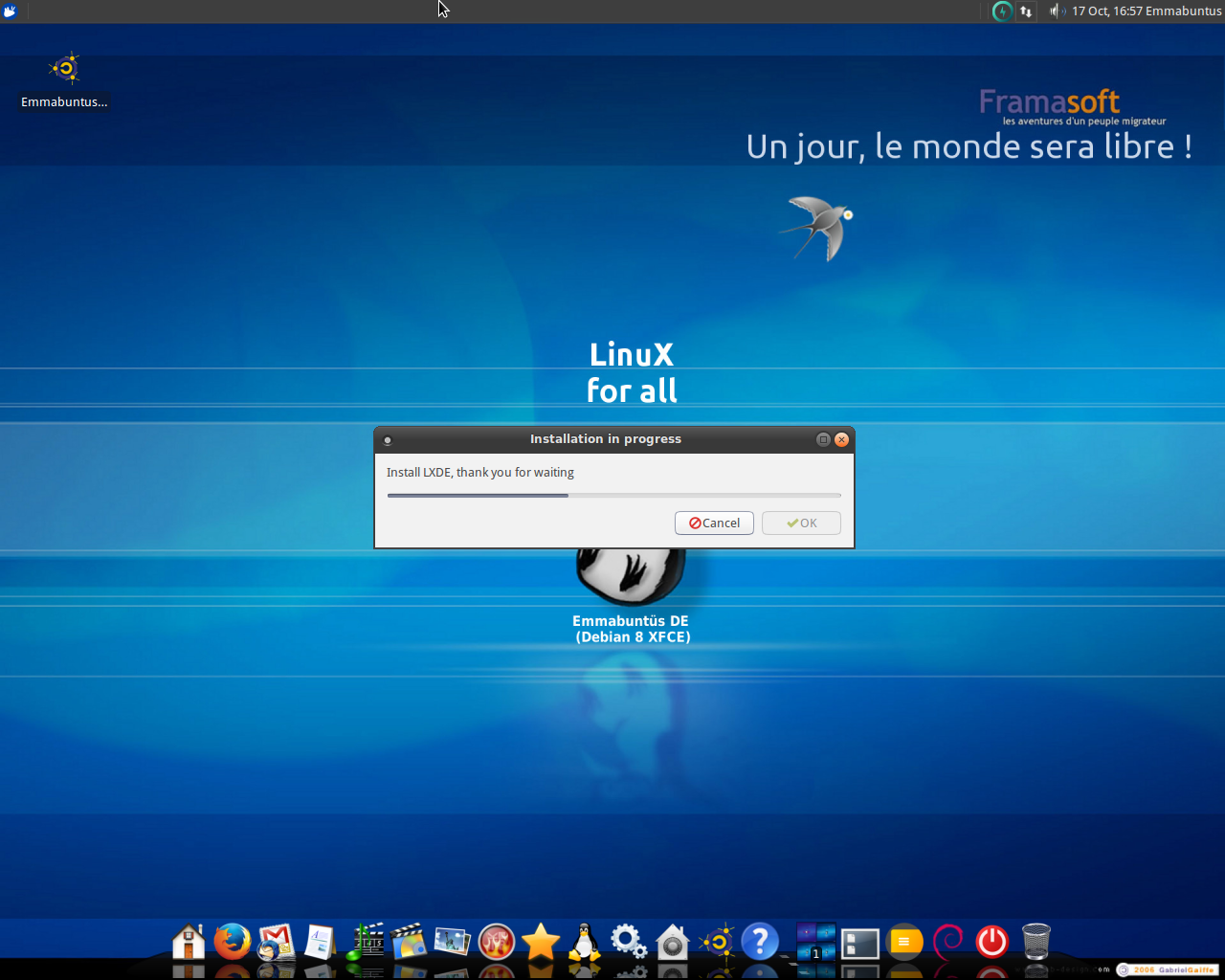
Use the CD as a repository. Say that you've screwed up your desktop and are booting to a command line with no internet access (which shouldn't happen, you can have internet even without a GUI). Ntlite Keygen. OK, you can put your CD in your drive and then run sudo apt-cdrom If all goes well, that should detect your CD, mount it and parse it for packages. Once that's done, run sudo apt-get update to refresh your sources and install your desktop normally. For example: apt-get install xfce4-desktop.

NOTE: I have not tested this but it is relatively well documented. See, for example,. Boot into the live session and get the packages you want. This one requires that you actually have a working internet connection in the live CD environment. First, boot into your normal (broken) OS and install apt-offline. If your system is already broken, you can download the package (make sure you also get the dependencies) and install with sudo dpkg -i apt-offline_1.3.1_all.deb Once you have it installed run sudo apt-offline set xfce-offline.sig --install-packages xfce4 Then, take the file that was just generated ( xfce-offline.sig), boot into the live session and run sudo apt-offline get xfce-offline.sig --no-checksum --bundle xfce-offline.zip Now, boot back into your local system to install it: unzip xfce-offline.zip That should result in a list of.deb files that you can then install manually. I also found something called which might be worth checking out: Keryx is a free, open source application for updating Linux.
The Keryx Project started as a way for users with dialup, or low-bandwidth internet to be able to download and update packages on their debian based distribution of linux. Mainly built for Ubuntu, Keryx allows users to select packages to install, check for updates, and download these packages onto a USB portable storage device. The packages are saved onto the device and are then taken back to the Linux box that it originated from and are then installed. Finally, you can also do all this manually with apt-get from the live session: sudo apt-get update --print-uris -y sed 's/'//g' cut -d ' ' -f 1,2 while read url target; do wget $url -O./$target; done The command above will download all.deb files needed to install xfce. See my answer for more details on how that works. References • • 3.
Use the live CD to set up a chroot environment. Setting up the chroot is explained in more detail but the basic procedure is (replace /dev/sda1 with whichever partition has your /): sudo mkdir /mnt/foo sudo mount /dev/sda1 /mnt/foo sudo mount --bind /dev /mnt/foo/dev && sudo mount --bind /dev/pts /mnt/foo/dev/pts && sudo mount --bind /proc /mnt/foo/proc && sudo mount --bind /sys /mnt/foo/sys sudo chroot /mnt/foo You have now tricked your system into thinking it is booted into your installed OS and you can use apt-get normally. Once you've finished, exit the chroot with exit and reboot.
Either by using the CD as a repository, or by booting into the live session and downloading the package manually and then installing from your normal OS or even by setting up a chroot environment. IN the examples below, I am using apt-get xfce as the command you will want to run but dpkg-reconfigure or whatever else would work as well. Use the CD as a repository. Say that you've screwed up your desktop and are booting to a command line with no internet access (which shouldn't happen, you can have internet even without a GUI). OK, you can put your CD in your drive and then run sudo apt-cdrom If all goes well, that should detect your CD, mount it and parse it for packages.